Flamingo and Flowers Embroidery Design Review
Unzipping the digital embroidery file for the first time always carries a little anticipation, especially when a design promises summer energy in stitch form. The Flamingo and Flowers piece landed on my screen and immediately changed the mood of the entire project folder I had open. This is not a shy, minimal accent. It is a confident, colorful statement that feels specifically built for medium to large apparel placement, and my mind instantly went to a sweatshirt collection I am currently developing for a small boutique brand.
Evaluating any machine embroidery design for commercial apparel requires a different lens than personal crafting. You are not just asking whether it stitches out cleanly. You are asking whether it holds attention in a lifestyle photograph, whether it justifies a higher retail price, and whether it communicates the aesthetic your boutique brand has spent months or years building. Flamingo and Flowers demanded that kind of scrutiny.
First Impression and Visual Personality
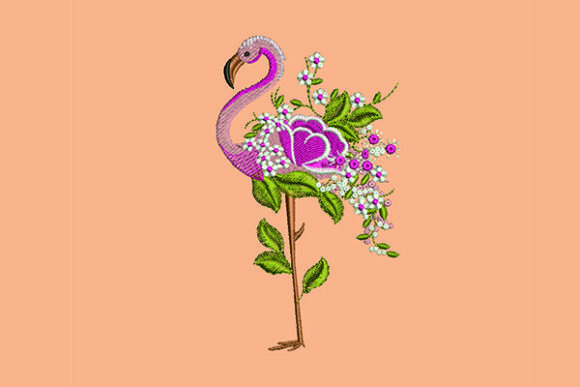
Opening the design preview, the immediate impression is warmth. The flamingo sits gracefully among generous floral elements, and the composition feels balanced without being stiff. There is a relaxed tropical vibe here, but it is edited enough to avoid looking like a loud vacation souvenir. For a custom apparel line targeting women who want something playful yet wearable, that balance matters enormously.
The mood leans feminine, decorative, and decidedly cheerful. Words like bold, cute, and rustic all apply depending entirely on fabric choice and thread color decisions. On a faded terracotta sweatshirt, this design would read earthy and artisanal. On a soft heather gray hoodie, it shifts casual and playful. On a deep navy or charcoal base, the colors pop with almost editorial intensity. That versatility is valuable for a small shop product because it means one embroidery file can serve multiple seasonal drops simply by changing garment color and styling.
The detail level appears substantial without crossing into overly dense territory, which is a genuine concern when reviewing any digital embroidery file intended for knits. The flamingo body has enough internal definition to read clearly, while the surrounding flowers and leaves add framing that will enhance chest placement beautifully. I could already picture how the finished embroidery sits raised against a quality cotton blend.
Placement Possibilities for Boutique Sweatshirts
When I plan a sweatshirt collection, placement is one of the first decisions that shapes the entire product lineup. For this design, I evaluated three primary positions and one accent option.
The obvious and strongest choice is center chest placement on a crewneck sweatshirt. The vertical nature of the Flamingo and Flowers composition fits the chest panel proportion perfectly, giving the design room to breathe without overwhelming the wearer. For a boutique drop, this placement photographs cleanly, layers well under jackets, and appeals to customers who want their embroidered pieces to feel intentional rather than oversized.
Oversized hoodie placement offers a different opportunity. Moving the design slightly higher on the chest or even scaling it up for a bold front-and-center statement changes the product personality entirely. A large Flamingo and Flowers on a relaxed hoodie in a pastel wash creates the kind of piece customers screenshot and share. It becomes the hero product in a collection rather than a supporting style.
I also considered sleeve accent application on a zip hoodie or raglan sweatshirt. A smaller version running vertically along the outer forearm would create subtle branding that feels elevated and unexpected. However, that approach depends heavily on whether the design maintains readability at reduced scale. Complex floral outlines and fine internal details can close up quickly at smaller sizes, so testing stitch-out at the intended hoop size is critical before committing to sleeve placement.
Back placement on a lightweight sweatshirt jacket is another possibility, particularly for a one-of-a-kind statement piece. A large-scale rendition across the upper back would turn a simple layer into a conversation garment. For a boutique brand building visual recognition, that kind of distinctive product matters.
Technical Evaluation and Production Considerations
Pretty artwork does not always translate to clean sweatshirt embroidery. I have learned this the hard way. So I approached this design with specific technical questions running through my mind.
The first thing I examined was stitch density. Floral elements surrounding a central figure can become problematic if the stitch count is packed too tightly, especially on knit fabrics that naturally stretch and move. Too much density creates stiffness, puckering, and a finished product that feels like body armor rather than soft apparel. Based on the visual weight of Flamingo and Flowers, this design appears to distribute stitches thoughtfully. The flamingo body has enough fill to feel substantial, while the flowers provide decorative framing without creating a solid block of thread. That breathing room is essential for drape and comfort.
Thread color contrast is another area where this design either shines or struggles depending on execution. The flamingo itself demands at least a few shades of pink to achieve dimension, plus a contrasting beak tone and eye definition. The floral elements add opportunities for greens, coral, yellow, or even soft blue accents. For my boutique sweatshirt collection, I would test this design with slightly muted thread palettes rather than neon brights. A dusty rose flamingo with sage green leaves and cream flowers would feel infinitely more premium on a garment than high-contrast carnival colors. The Animal Quotes category suggests personality and warmth, which aligns better with sophisticated color choices.
Fabric texture plays an equally important role. French terry, fleece-backed cotton, and loopback sweatshirt material all behave differently under an embroidery needle. A design with this much coverage needs a stable surface. I would reach for a medium-weight cutaway stabilizer without hesitation, and possibly a water-soluble topping if the fabric has any nap that might swallow fine details like the flamingo neck curve or small leaf points. Skipping proper stabilization on a fluffy sweatshirt blank is the fastest way to ruin a beautiful embroidery design and lose money on a production run.
Color Testing Across Garment Options
Because Flamingo and Flowers carries such strong seasonal association, the choice of garment color shifts the entire product narrative. I mentally tested the design across several sweatshirt colors that perform well in boutique settings.
On a natural cream or oatmeal sweatshirt, the design would read soft and romantic. The flamingo pink becomes the focal point, and the entire piece feels airy and feminine. This combination photographs beautifully in natural light and appeals strongly to customers shopping for spring and summer transitional layers.
On a dusty pastel blue or lavender base, the design takes on a dreamy, almost watercolor quality. This palette resonates with buyers seeking something whimsical without being childish. For an Etsy seller or handmade business owner, this color story differentiates their product from mass-produced embroidered sweatshirts.
On a dark charcoal or black sweatshirt, the colors demand attention. The contrast is striking, and the embroidery becomes the entire visual identity of the garment. This direction works for bold, statement-oriented customers and makes product photography pop with minimal styling effort.
On a warm terracotta or clay-colored base, the flamingo pink harmonizes unexpectedly well, creating an earthy, rustic feel that fits the modern boutique aesthetic perfectly. I am seriously considering this combination for the upcoming limited drop.
Production Durability and Commercial Readiness
A design that looks gorgeous on the first wear but deteriorates after three washes damages more than a single garment. It damages buyer trust. For a boutique brand building repeat customers, every embroidered piece must withstand real life.
Flamingo and Flowers, with proper digitizing and correct production settings, should perform well through regular washing and drying cycles. The key factors are stitch type selection, thread quality, and adequate stabilization. Satin stitch borders around larger fill areas help seal edges and prevent fraying. Dense underlay stitching beneath the main fill prevents shifting and distortion over time. I cannot confirm the specific digitizing decisions made in this file without running a test stitch-out, so I would strongly recommend sampling on the actual garment material before ordering a production batch.
For commercial embroidery applications, the design needs to hold up under a multi-needle machine running at production speed. A design that stitches beautifully on a single-needle home machine at slow speed may behave entirely differently on a commercial setup. Thread breaks, tension shifts, and registration errors become more likely as stitch count increases and complexity rises. I would run at least two full test pieces at production speed before greenlighting inventory.
Merchandising and Brand Presentation
Beyond the stitched garment itself, this design carries strong potential for cohesive brand presentation. A boutique sweatshirt collection benefits enormously when the design assets support marketing efforts. A printable mockup or lifestyle photo featuring Flamingo and Flowers can anchor an entire product listing, social media campaign, or email launch.
For Etsy sellers, this design checks multiple search-friendly boxes. Flamingo motifs carry consistent seasonal interest. Floral elements appeal across demographics. The combination feels giftable, photogenic, and distinct. Writing a product description around this embroidery practically writes itself. Words like colorful, tropical, garden, summer, botanical, and cheerful all connect naturally without feeling forced.
I can already envision the product photography. A model wearing the embroidered sweatshirt in golden hour light, surrounded by actual greenery or against a textured wall. A flat lay with dried flowers and neutral props. A close-up detail shot showing the stitch texture and thread sheen. These images would communicate craftsmanship and intention, both critical for handmade product positioning in a crowded market.
Final Assessment for Boutique Use
After thorough consideration, Flamingo and Flowers earns its place in my sweatshirt collection plan. It delivers on visual impact, offers enough versatility for multiple garment colors and styles, and presents a clear personality that aligns with what boutique customers actively seek. The design reads as intentional, cheerful, and distinctly crafted rather than generic or mass-produced.
There are considerations any embroiderer must address before production. Confirm the embroidery file includes the correct formats for your machine setup. Verify the hoop size required matches your equipment capabilities, especially if you plan to run multiple sizes across different placements. Test stitch-out on your chosen blank with the appropriate stabilizer and thread colors before committing to a full run. And pay close attention to how the design scales. A file that stitches perfectly at one size may need adjustments for significantly smaller or larger applications.
For a small boutique brand, a design like Flamingo and Flowers does more than decorate fabric. It communicates a perspective. It tells a customer that this shop understands color, mood, and the difference between ordinary apparel and something worth wearing repeatedly. In the Embroidery category of product development, that distinction is everything.