Wood Picket Fence Embroidery Design Review
When I first spotted the Wood Picket Fence machine embroidery design in the House category on Creative Fabrica, I immediately knew it had the kind of quiet charm that sells. As someone who stitches for custom apparel, handmade gifts, and boutique shops, I’m always hunting for designs that feel versatile without being overly complicated. This one promised simplicity — just three thread colors — and a nostalgic farmhouse mood that works across so many handmade products. Before ever hitting “download,” I let myself imagine it on a linen apron, a baby blanket, or a canvas tote bag. The visual mood felt warm, welcoming, and exactly the kind of decorative detail that turns a plain finished product into a story.
But a pretty preview is only half the picture. Over the years I’ve learned that the real test of any embroidery file happens under the needle, on different fabrics, through repeated washes, and in front of paying customers. So I took a thorough look at what the Wood Picket Fence design offers from a maker’s perspective — digging into its stitching personality, the file formats provided, the practical ways it might behave on tricky materials, and whether it truly earns a spot in my digital embroidery file library. This is that honest evaluation, written for fellow embroidery designers, Creative Fabrica users, Etsy sellers, small business owners, and anyone who stitches for profit or passion.
First Impressions: Warm, Simple, and Ready for Product Use
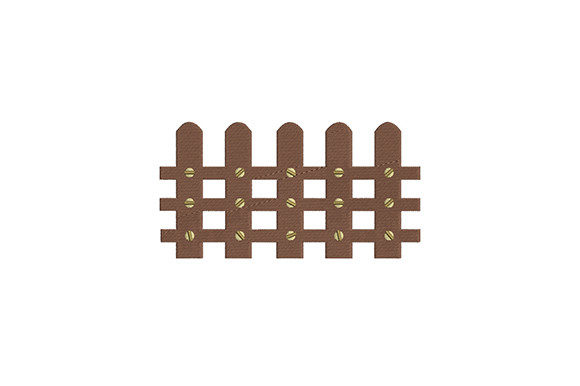
The Wood Picket Fence design captures the essence of a classic cottage garden edge without demanding a huge stitch count or an intimidating color palette. With only three thread colors listed in the additional details, it’s economical on thread changes — a major plus when you’re producing multiple items for a craft fair order or batch-listing products for your Etsy shop. The preview showed what appeared to be a balanced mix of satin stitch outlines and likely fill stitch areas, giving the fence posts a bit of texture while keeping the overall shape readable even at smaller sizes.
Because it falls under the House category, you immediately grasp the design’s intended vibe: domestic, cozy, slightly rustic. That thematic clarity makes it easy to envision the finished stitch-out on kitchen towels, throw pillows, or nursery wall hangings. The fence motif implies neatness and boundaries, which — ironically — makes it a fantastic subtle background element for products that feature housewarming messages, family names, or even an embroidered patch celebrating a new home. It’s not a loud design; it’s the quiet backbone of a cohesive handmade collection.
Stitching Personality and the Power of Three Colors
Any embroidery designer knows that a limited color count often means the digitizer had to be clever about structure. The Wood Picket Fence design appears to lean on contrast: likely two shades for the fence itself (perhaps a wood tone and a shadow or outline) plus a third for grassy or floral accents peeking through the slats. This is exactly the sort of restraint that keeps stitch density manageable. Too many colors crammed into a small space can lead to bulky build-up, needle breaks, or stiff patches on soft goods. Here, three colors promise a gentler hand, which is wonderful news for baby items, cozy sweatshirts, and any product that needs to stay drape-able.
During a stitch test — and I always recommend doing a scrap fabric run first — pay close attention to how the running stitch underlay sets the foundation. The fence’s vertical elements should feel crisp without puckering lightweight fabrics. I’d be especially curious to see if the design includes any open spaces between pickets; that negative space can become a design asset, letting the base fabric peek through and adding a subtle organic feel. It’s the kind of detail that photographs beautifully in a printable mockup and makes a finished product look custom, not cookie-cutter.
Practical Projects: Where This Fence Shines
One of the biggest questions I ask before purchasing a digital embroidery file is: “How many different products can I realistically stitch this on?” With the Wood Picket Fence, the possibilities genuinely stretch across a maker’s entire catalog. Here are a few ideas that feel especially natural:
- Kitchen towels and aprons — Imagine this along the hem of a flour-sack towel, paired with a small herb or floral motif. It instantly elevates a mundane kitchen staple into a boutique item.
- Tote bags and canvas pouches — A fence motif framing a monogram or a short word like “grow” or “home” turns a simple bag into a personalized gift.
- Pillow covers and nursery decor — Stitched in soft pastel threads on a white or cream base, the design becomes gentle, dreamy, and perfectly nursery-appropriate.
- Sweatshirts and casual apparel — Placed on a sleeve or a chest pocket area, the picket fence adds a subtle decorative pop without overwhelming the garment.
- Embroidered patches and caps — If the design is digitized cleanly and fits a standard hoop size, you could finish it as a standalone patch or stitch it on a dad cap for a touch of whimsy.
- Baby blankets and bibs — The low color count and (presumed) moderate stitch density reduce skin irritation risks, and the theme works beautifully for baby shower gifts.
For Etsy listings and craft fair products, the fence can be the star or a supporting player. Pair it with text, small animals, flowers, or even a welcome mat design for gift bundles that practically market themselves. From a branding perspective, it gives your shop a consistent pastoral or farmhouse thread that buyers recognize and trust.
Technical Considerations: Fabrics, Hooping, and Stabilizer
Before you load the needle, there are a few practical points to check directly on the Creative Fabrica product page (since some specifics, like exact dimensions or stitch count, aren’t detailed in the provided summary). Here’s my working list:
- Hoop size — Confirm the design’s width and height. Many picket fence motifs are horizontally elongated, so a 5x7 or larger hoop might be necessary. Always measure your intended product area before starting.
- Stitch density — Watch for any overly dense fill areas, especially in the fence posts. On stretchy fabric like a sweatshirt, dense stitching can cause buckling. A test run on a similar fabric scrap is non-negotiable.
- Fabric type — Light cotton and linen make the fence details pop nicely. On dark fabrics, the three colors might need adjustment; consider lightening one of the tones or adding a thin white underlay for visibility. On textured fabrics like waffle weaves, intricate satin stitch borders can catch or sink, so use a topper if needed.
- Stabilizer choice — For tote bags and caps, a firm cut-away stabilizer helps maintain shape over time. For delicate baby items, a soft tear-away or a wash-away might be kinder, especially if the back of the embroidery will touch skin.
- Thread color contrast — Just three threads means each choice matters. I’d test a high-contrast version (dark wood, bright green) next to a low-contrast one (soft taupe, sage) to see what photographs best for your shop listings.
- Curved surfaces — On caps, the fence’s straight lines could warp if not positioned carefully. Stitching on a curved cap profile might require a slight design rotation or a smaller sizing option.
File Formats and Machine Compatibility
The Wood Picket Fence download includes an extensive list of embroidery file formats: 10O, ART, CND, DSB, DST, DSZ, EXP, HUS, JEF, JEF+, PCS, PEC, PES, SEW, TAP, VIP, VP3, VP4, and XXX. That’s a wide net, covering Brother, Janome, Bernina, Husqvarna, Viking, Pfaff, Melco, and many commercial machines. It’s a relief to see a design that doesn’t require format conversion gymnastics before you can even test it. Whether you’re running a single-needle home machine or a multi-needle commercial setup, you’ll find a compatible file.
One note: always double-check the file naming and any readme notes on the Creative Fabrica product page. Some digitizers provide multiple sizes within a zip folder, which can be a bonus if you want to stitch the fence in a small reading nook motif or a larger wall panel-like piece. Without that information, I’d recommend opening the design in your embroidery software first to verify size, color sequence, and any trims or jumps that might need manual adjustment.
Preparing for Real Customer Orders
If you’re selling finished goods featuring the Wood Picket Fence, a little preparation goes a long way toward protecting your brand reputation. Start with your typical test stitch — I like to use a scrap of the exact fabric and stabilizer I plan to use on the final product. Check for thread breaks, design shifting, and edge smoothness. Since only three colors are used, pay extra attention to color change accuracy; a missequenced stop can ruin the layered fence effect.
When photographing the finished item, use natural light to highlight the design’s texture. Buyers love to see a close-up of the embroidery on a product listing, and the fence’s straight lines and open spaces give you plenty of visual breathing room. Pair the stitched item with a printable mockup or flatlay so your shop shows consistency. For commercial embroidery or personalized gift batches, consider stitching a sample on both light and dark substrates so you can guide customers on thread color options — that proactive touch builds buyer trust fast.
Building a Brand Story Around a Design
Successful Etsy sellers and boutique owners know that consistent visual themes create loyal followings. The Wood Picket Fence design can act as a unifying design asset across a whole collection: think a “Home Sweet Home” series with matching towels, pillows, and wall decor all featuring this same fence motif. When customers recognize your signature style, they’re more likely to purchase multiple items or recommend your shop to friends looking for thoughtful handmade gifts.
Giftability matters, and this design scores high on that front. A child’s apron stitched with a sweet fence scene feels personal without being overly cutesy. A housewarming tote bag feels intentional. Even a small embroidered patch sewn onto a journal cover can spark an impulse buy at a craft fair. The three-thread simplicity also means you can offer custom color variations without overhauling your production workflow — a quick thread swap, and suddenly the fence fits a seaside-themed kitchen or a woodland nursery.
What to Watch Out For
No design is perfect, and I always remind fellow stitchers to stay alert for a few potential hiccups. Small hoop sizes might force a fence this width to be reduced below its intended scale, which can close up delicate gaps or thicken outlines. If the original digitizing includes fine satin stitch lines, they could become too dense when scaled down, so never assume an auto-resize will work smoothly unless the product description explicitly says the design is sized for multiple hoops.
Also, keep an eye on how the design handles repeated washing if you’re making kitchen towels or baby clothes. A good stabilizer and proper thread tension will keep those pickets looking crisp for years. On dark garments, light thread colors may show underlay or bobbin thread; a quick check on black fabric can save you from surprise quality issues. Finally, always verify the Creative Fabrica license terms before selling items stitched with this design — especially if you’re scaling into commercial quantities or offering custom orders.
Is the Wood Picket Fence Design Right for Your Lineup?
After looking at this design from every angle a working embroidery designer would consider, I see it as a quietly powerful addition — not a flashy centerpiece, but a reliable foundation motif that helps elevate everyday products into memorable handmade offerings. Its three-color restriction encourages thoughtful thread pairing, its House category cues a cozy aesthetic, and its minimalism means you won’t spend half your day on color changes. For Etsy sellers, it’s the kind of design that can fill out a shop section, contribute to bundle deals, and photograph beautifully in styled flatlays.
That said, the responsibility to test thoroughly, read all details on the Creative Fabrica product page, and match the design to the right fabrics and stabilizers is entirely yours. A design this clean has the potential to become a best-seller in your commercial embroidery rotation — but only if you treat it with the care any digital embroidery file deserves. Whether you stitch it on a cozy sweatshirt, a gifty towel set, or a sweet baby blanket, the Wood Picket Fence design will likely deliver the warmth and charm your customers are searching for.