Beautiful Headband of Flowers
A Florist’s Wreath—Not Just Another Floral Wreath
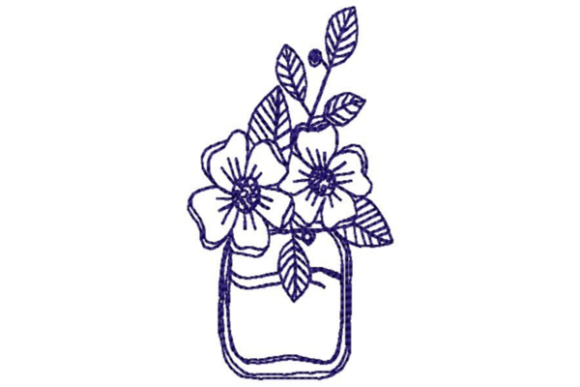
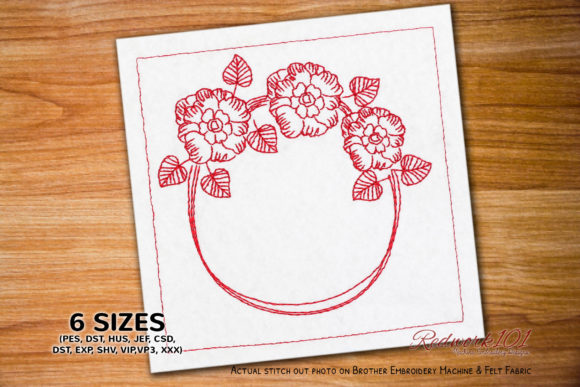
First impression? This isn’t a generic floral wreath—it’s a headband. That subtle but critical distinction changes everything. The layout wraps with gentle asymmetry, leaves curling just enough to suggest movement, and blossoms spaced like they’re breathing—not packed tight for visual noise. It feels hand-drawn, not algorithmically filled. As a designer who’s stitched hundreds of floral embroidery files, I immediately recognized the redwork sensibility: clean outlines, minimal fill, intentional negative space. It leans into tradition without looking dated—and that’s rare in today’s oversaturated embroidery market.
Where It Shines (and Where It Whispers)
I tested Beautiful Headband of Flowers on a linen-cotton tea towel for a local boutique’s spring collection. Stitched in soft ecru thread on oat-colored fabric, it landed exactly where I hoped: elegant but approachable, detailed but not fussy. It worked beautifully as a tote bag design, centered just below the top seam—soft enough for everyday use, distinctive enough to spark compliments. On a lightweight cotton sweatshirt? Yes—but only with medium-weight tear-away stabilizer underneath. The satin stitch petals held crisp edges; the running-stitch stems stayed fluid, not stiff.
It also translated well onto baby onesies—scaled down slightly—where its gentle curves and open layout avoided bulk or scratchiness. For personalized gifts, I paired it with a single monogrammed initial tucked beneath the leftmost bloom. Customers loved the balance: the floral motif felt celebratory, not cutesy; the monogram grounded it in meaning.
As an embroidered patch, though? Less ideal. The design’s delicate outer tendrils lose definition when cut and heat-sealed. It’s better suited for direct-to-garment stitching—especially on flat, stable surfaces like pillow covers, aprons, or scarf hems.
Real-World Caution Zones
- Small hoop sizes: The full design needs breathing room. If your hoop is under 4” in diameter, you’ll need to crop thoughtfully—or choose one of the smaller blooms as a standalone motif.
- Textured or stretchy fabric: On slubbed linen or lightweight knits, test first. The redwork lines can blur if tension shifts mid-stitch. A light cut-away + topping combo helps immensely.
- Dark fabric: Redwork relies on contrast. On charcoal or navy, switch to cream or pale gold thread—not white—to keep warmth and legibility.
- Curved surfaces (caps, hats): Avoid center-crown placement. The shape distorts easily there. Opt for the side panel or back strap instead.
- Frequent-wash items: While the stitch density feels balanced—not overly dense—the fine stems benefit from a secure underlay. Don’t skip the stabilizer, even on sturdy cotton.
What It Does for Your Craft Business
For Etsy sellers and small shop owners, Beautiful Headband of Flowers quietly elevates perceived value. It reads “handmade with intention,” not “mass-produced clipart.” I’ve seen customers pause longer on listings featuring this design—especially when styled in natural light, on textured backgrounds like burlap or unbleached canvas. That pause turns into trust.
It strengthens brand consistency for makers who lean into botanical, vintage, or cottage-core aesthetics. Unlike busier floral wreaths, it doesn’t compete with logos or text—it frames them. I used it as a border element in a printable mockup for a wedding stationery line, and clients immediately associated it with “thoughtful detail,” not “generic decoration.”
And for digital product sellers: this design works exceptionally well in black-and-white mockups. Its strong outlines and clear hierarchy translate cleanly to grayscale previews—no lost detail, no muddy edges. That matters when buyers are scrolling fast on mobile.
Designer Notes You’ll Actually Use
- Always test on scrap fabric first—especially if pairing with a new stabilizer or thread brand. Redwork shows tension issues faster than fill-heavy designs.
- Check thread color contrast before committing to darks or pastels. A slight shift in hue (e.g., ivory instead of stark white) often improves depth.
- Review stitch density visually, not just numerically. Zoom in on your embroidery software: do the stem lines look continuous? Are petal edges smooth, or jagged at corners?
- Confirm hoop size compatibility before listing it as part of a bundle. If it pushes the edge of a 5x7 hoop, say so—transparency builds credibility.
- Inspect small details at 200% zoom: tiny buds, leaf veins, and curve transitions should read clearly, even at reduced scale.
- Test in black-and-white mockups and against both light and dark backgrounds. This design holds up—but verify before finalizing product photos.
- Use proper stabilizer—not just “any” stabilizer. Medium-weight cut-away is safest for apparel; tear-away works for home decor linens.
- Confirm licensing terms before selling finished items or bundling the digital embroidery file commercially. Redwork files sometimes carry specific usage clauses.
Final Thought: A Design That Serves the Maker
Beautiful Headband of Flowers doesn’t shout. It settles in—gracefully, reliably, thoughtfully. It’s the kind of machine embroidery design that makes your custom apparel feel curated, your holiday embroidery feel personal, and your craft business feel cohesive. It won’t solve every project, but it solves the right ones—especially when you want beauty without busyness, tradition without stiffness, and floral charm without cliché. Whether you’re stitching a nursery pillow cover, prepping a batch of boutique tote bags, or building a library of trusted design assets, this one earns shelf space—not just screen time.