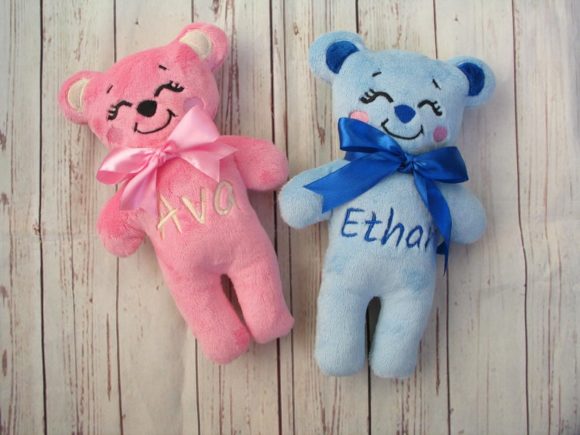
Stuffed Teddy Bear Embroidery: A Designer's Review
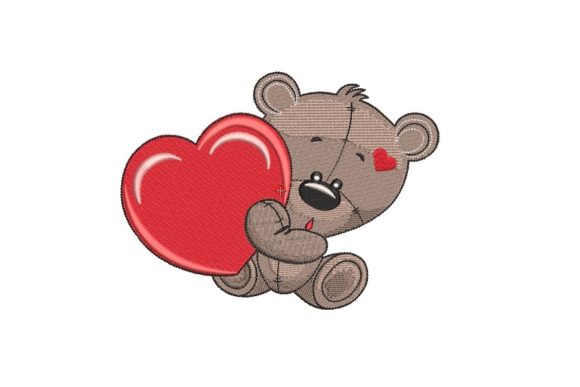
When I first opened the preview for Stuffed Teddy Bear, I immediately pictured a sleepy toddler clutching a blankie with this exact face stitched into the corner. That is the kind of reaction you want from an embroidery design meant for children — instant emotional recognition. The shape reads as soft and rounded, the sort of silhouette that translates beautifully into thread without losing its gentle personality. Too many teddy bear designs lean stiff or overly cartoonish, but this one carries a calm, approachable expression that feels handmade in the best way.
For anyone building a product line around baby or children's items, the mood here matters. Stuffed Teddy Bear delivers a quiet sweetness without tipping into saccharine territory. It is the kind of design a parent would choose for a coming-home outfit or a keepsake blanket, and that emotional weight is exactly what small shop owners and Etsy sellers need when positioning their work as gift-worthy rather than generic.
What This Design Brings to the Hoop
Before I stitch anything, I spend time studying the linework and density distribution. Stuffed Teddy Bear has a confident outline structure that suggests the digitizer understood how thread behaves on fabric. The shapes appear clean without being overly simplified, and there are enough interior details — subtle curves, ear definition, paw placement — to keep the finished stitchout from feeling flat. When a design lacks those small interior breaks, it can turn into a heavy patch of thread that puckers on lightweight fabric. This one seems to balance fill stitches with open space reasonably well.
What I look for in any embroidery file intended for children's products is whether the expression holds up at smaller sizes. A scrunched face or overly detailed eye can stitch out muddy on a tiny onesie. Stuffed Teddy Bear reads clearly even when you mentally scale it down, which tells me the digitizer made smart choices about detail placement. The nose and eye area look distinct enough to stitch with clarity, which is critical — if the face blurs, the whole product loses its charm.
Where I Would Actually Use This Design
My immediate instinct is baby shower gifts. A soft cotton receiving blanket with this teddy centered in the corner, maybe paired with the baby's name in a coordinating thread color, would easily sell at a boutique price point. I have done enough craft fairs to know that nursery decor with animals moves faster than anything else on the table, and Stuffed Teddy Bear fits that niche perfectly. It also has the kind of timeless appeal that works on quilt blocks, muslin swaddles, and crib sheets — products people buy repeatedly for baby registries.
Another strong use case is personalized children's tote bags. Think about library totes or small canvas bags for carrying toys. A tote bag design with this teddy and a child's first initial underneath becomes a simple, repeatable product that photographs well and ships flat. For Etsy sellers, that kind of low-effort customization is gold because it cuts production time while still feeling bespoke.
I would also consider unisex sweatshirts for toddlers. A cream or oatmeal sweater with a small chest placement of this design would work for both boys and girls, which doubles your customer base instantly. The machine embroidery design suits a soft color palette — think taupe, blush, sage, butter yellow — thread choices that lean warm rather than harsh. Dark thread on a light garment keeps the vintage toy aesthetic intact.
Fabrics That Love This Design, and Fabrics That Fight It
In my experience, a design like Stuffed Teddy Bear wants a smooth canvas. Cotton poplin, quilting cotton, lightweight canvas, french terry, and linen blends will all play nicely. These fabrics have enough body to support the stitch density without warping, but they are not so thick that tiny details get swallowed. I would not hesitate to stitch this on a quality t-shirt or onesie, provided I use a topper on anything with a knit pile.
Where I would exercise caution is on anything with heavy texture. A chunky knit sweater will distort the bear's face beyond recognition. Fleece and minky fabrics, while thematically perfect for nursery items, can hide small satin stitches under their nap. If you are determined to use plush fabrics, test the design on a scrap first and be prepared to sacrifice some fine detailing for the sake of the overall shape. The same goes for stretchy fabric — a onesie needs proper cutaway stabilizer and possibly a water-soluble topper to keep those tiny eye and nose stitches crisp.
Ballerina caps and curved brims introduce their own challenges. The rounded shape of the bear could distort near the crown seam. If you are stitching on caps, pay attention to the design's overall width so you are not fighting the curve of the hat. A left-chest placement on adult apparel is generally safer, while smaller youth items can handle a centered placement without looking oversized.
Stitch Quality and Long-Term Durability
One thing I always evaluate before listing a finished product is how a design will hold up to washing. Parents wash baby items constantly — hot water, frequent cycles, sometimes aggressive detergents. A poorly digitized satin stitch can fray at the edges after a dozen washes, and a fill stitch that is too sparse will show fabric peeking through. Stuffed Teddy Bear appears to have balanced satin stitch outlines with moderate interior fills, which bodes well for durability. I would still recommend running a wash test on your sample product before shipping anything to a customer. It is the only way to know for sure whether thread tension holds and colors stay true.
Thread color selection also affects longevity perception. If you stitch the bear in a pale cream against white fabric, any slight fading will be invisible. Contrast that with a dark brown thread, and even minor wear becomes obvious. For baby products especially, I lean toward medium-contrast choices that feel gentle but do not look dingy after repeated laundering.
A Real Project Walkthrough: The Boutique Gift Set
Let me walk you through a specific project I am planning with Stuffed Teddy Bear. A repeat client wants a coordinated newborn gift set for her daughter-in-law — something she cannot find at a big box store. The brief is elegant but childlike, sophisticated enough for a nursery that leans modern, but still unmistakably for a baby.
I am building the set around a butter-soft bamboo muslin swaddle. The bear will be stitched in a muted taupe thread on one corner, roughly four inches tall. Because bamboo is lightweight and slightly slippery, I am reaching for a fusible mesh cutaway stabilizer and hooping with a light touch so the fabric does not pull. I will float a piece of tearaway underneath for extra stability during the satin border stitches.
The second piece is a coordinating bib made from organic cotton. Here I am using the same bear at a smaller scale, around two inches, centered beneath the neckline. Bibs get wet, tugged on, and washed constantly, so I am adding a poly-cotton thread for better colorfastness. The third item is a simple two-layer burp cloth with the design tucked into the bottom corner where it will not rub against the baby's chin. All three pieces together form a cohesive set that photographs beautifully for my shop listing.
This is the kind of project where Stuffed Teddy Bear shines. The design is versatile enough to scale across different products without losing identity, and the theme ties everything together without needing extra embellishment. When I picture the flat lay photos for my product listing, I can already see how the soft taupe stitching will pop against the pale cream fabric.
Thoughts on Selling Finished Products
If you are an Etsy seller or small shop owner, the question always comes down to whether a design will help or hurt your margins. Stuffed Teddy Bear works in your favor because it stitches quickly — the moderate density means fewer thread changes and shorter run times compared to heavy fill designs. Time is your biggest expense on customized items, and a design that finishes efficiently while still looking upscale is a smart investment.
It also photographs well, which matters enormously for online listings. A clear, recognizable shape photographs better on a flat lay than something overly intricate that gets lost at thumbnail size. Buyers scrolling through search results respond to instant legibility. If they can identify the teddy bear in a split second, your click-through rate improves. That is just basic product photography logic, but it consistently surprises me how many sellers overlook it when choosing embroidery project designs.
One practical note: before you list any items using this design for sale, verify the license terms. Many digitizers allow commercial use on finished physical products but prohibit reselling the digital file itself or using it in printable mockup collections without extended licensing. Do not assume. Check. It protects your shop from takedown notices and protects the digitizer's work. This applies whether you sell on Etsy, at craft fairs, or through your own website.
Things to Test Before You Commit to a Product Run
I keep a pre-production checklist for every new design I introduce into my product rotation. For Stuffed Teddy Bear, here is what I recommend testing:
- Fabric swatches in light and dark. A cream-colored bear on navy fabric may need a lighter thread tone or a slight outline adjustment to read properly.
- Wash cycle performance. Run your sample through at least five hot washes and tumble dries. Check for thread breaks, edge fraying, and color bleeding.
- Hoop placement on curved garments. If you stitch on caps or sleeve cuffs, test how the design falls on a curved surface before offering it as a product option.
- Size scaling. See how small you can go before the facial features start to close up. That tells you the minimum size for bibs, hat patches, or pocket accents.
- Thread brand consistency. Different thread brands behave differently under tension. If you normally use polyester and switch to rayon for a project, the stitch finish may change.
Taking thirty minutes to run these tests saves you from customer complaints later. I learned that lesson the hard way years ago, and I have not shipped an untested product since.
Who This Design Is Really For
Ultimately, Stuffed Teddy Bear is for makers who want a design that does not fight them. It is not the most elaborate teddy bears collection piece you will ever see, but that restraint is precisely what makes it usable. You can drop it onto a wide range of products without overthinking placement or color choices. You can build an entire baby collection around it. You can offer it as a single-item customization without needing to upsell companion designs.
For embroidery newcomers, it is forgiving enough to build confidence. For seasoned pros, it is reliable enough to batch out without constant babysitting. And for anyone building a craft business, it lands in that sweet spot between charming and practical — the kind of design that customers pick up at a market stall, smile at, and carry home without hesitation.
That quiet, steady appeal is harder to digitize than it looks, and Stuffed Teddy Bear gets it right.